Texture guide
Sensory stress relief toys: choose by texture, noise, and setting
Sensory stress relief toys are not one category with one correct texture. A person may prefer a firm squeeze, a smooth surface, a repeating click, or a quiet creative task. Use this guide to make the choice more specific and less driven by hype.
- Compare first
- Surface, resistance, sound, cleanup
- Best test
- Use it in the real room
- Paper craft
- Visual and making-focused
Sensory does not mean the same thing for everyone
One person may like a dense stress ball because the resistance is predictable. Another may prefer a soft, fuzzy surface or a small object that can be rolled between the fingers. Some people need a quiet option for a classroom or meeting; others enjoy the sound of a pop or click at home. Start with the sensation, not the label on the product page.
Also separate comfort from treatment. A sensory toy can be a personal tool for a short routine, but marketing language does not establish that it will regulate everyone or help with a medical condition. Ask what the user can comfortably touch, carry, and clean, then test the object in the setting where it will actually be used.
A simple four-part comparison
Surface is the first filter: smooth, fuzzy, ridged, tacky, or fabric. Resistance is the second: light, medium, firm, stretchy, or slow to rebound. Sound matters when other people share the room. Cleanup matters when the toy travels in a bag or is handled by many children.
A good choice does not need to win every category. It only needs to be comfortable enough for the moment. If the surface collects lint, the toy needs cleaning. If it contains small pieces or a filling you cannot identify, it needs extra caution. If the object creates more sensory input than the person wants, put it away without treating that as failure.
- Smooth and quiet: often easier for shared spaces.
- Firm and dense: useful when a stronger hand press feels comfortable.
- Textured or fuzzy: choose only if the surface is welcome, not irritating.
- Paper craft: best for visual choice, handwork, and a short making ritual.
What a paper squishy adds to the sensory mix
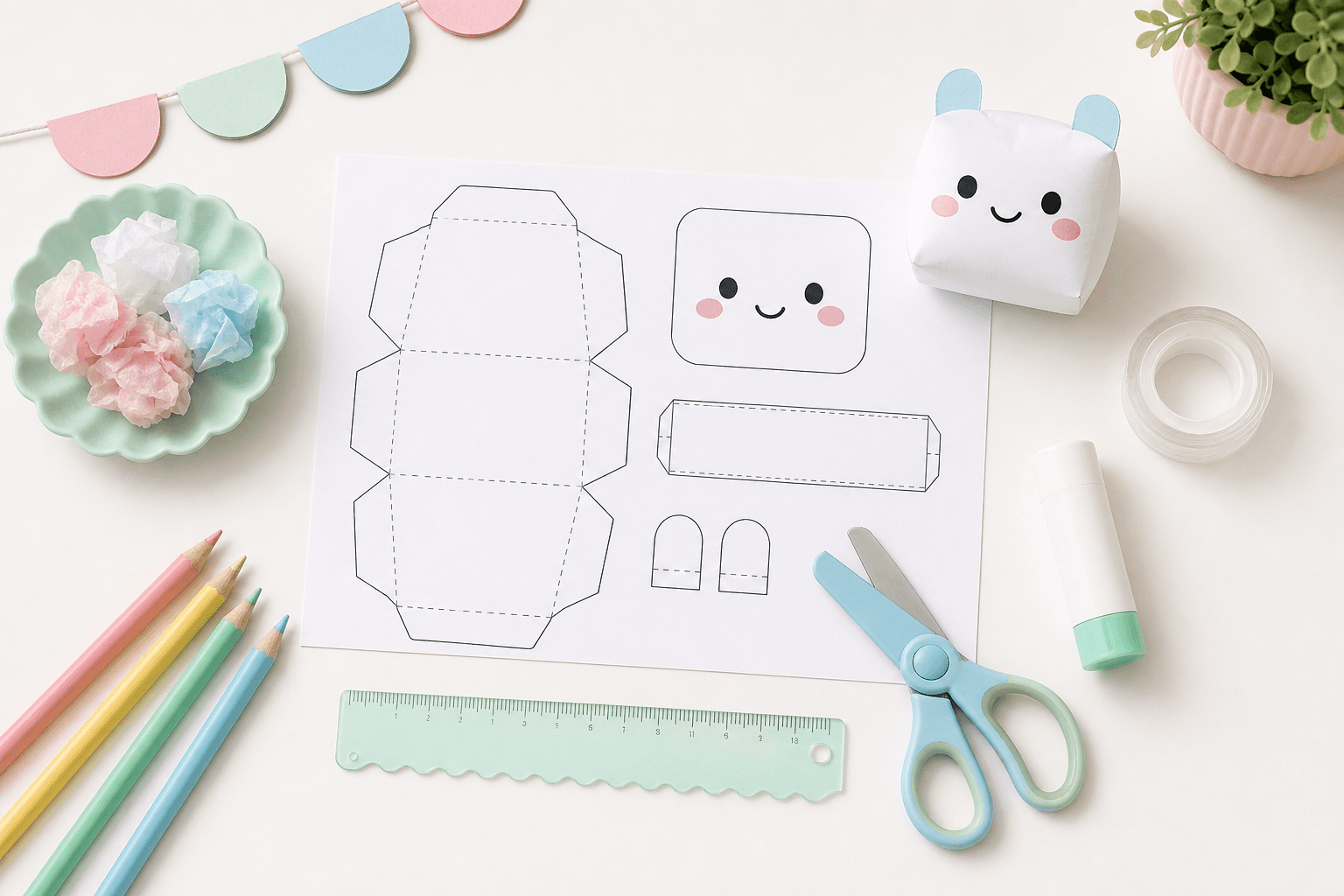
A printable paper squishy is not a therapy product and does not recreate a rubbery or gel texture. Its value is more deliberate: the maker selects a design, traces a sequence, and finishes a small object. Cutting, folding, filling, and taping offer separate steps, so the project can be paused instead of demanding one long session.
For a group, keep the materials predictable. Use ordinary paper, pre-cut tape strips, a small amount of tissue, and a finished sample. For an individual maker, let them choose whether to decorate, add a face, or leave the pattern simple. Control over the visual result is part of why the craft feels personal.
A practical way to start
- 1
Name the sensation
Choose surface, resistance, sound, or a creative task as your starting preference.
- 2
Test the room
Use the toy or craft where it will live and notice noise, mess, attention, and comfort.
- 3
Remove friction
Keep tape, cleaning supplies, or replacement paper ready so the routine stays easy.
- 4
Respect the no
If a texture or sound is irritating, stop and choose a different input without forcing it.
Useful source notes
These links support the product-safety or brand-specific details above. Product availability and rules can change, so use the source’s current instructions when making a purchase or using a kit.
- CPSC sensory-product guidance
Products marketed as sensory still need age, ability, and part checks.
- CPSC toy safety guidance
Use the package age guidance and inspect toys regularly.
Common questions
What makes a toy sensory?
A sensory toy is usually designed around an input such as pressure, texture, movement, sound, or visual feedback. The same input can feel calming to one person and overwhelming to another.
Are sensory stress relief toys automatically safe?
No. Check age guidance, small parts, magnets, fillings, and the condition of the toy. Sensory marketing does not remove normal toy-safety risks.
Can a paper squishy replace a sensory toy?
No. It offers a different experience: visual design and hands-on making with a lightly filled paper object. It does not reproduce the texture or safety testing of a manufactured sensory toy.