DIY tool guide
Squishy maker: what the DIY process really involves
A squishy maker can mean a branded device, a refillable kit, or simply a search for ways to make your own squeeze toy. This guide separates those meanings and gives you a low-mess paper route when you want a creative result without mixing materials.
- Maker device
- A tool for filling a shell
- Kit project
- Prepare, fill, secure, decorate
- Paper route
- No device or liquid mix needed
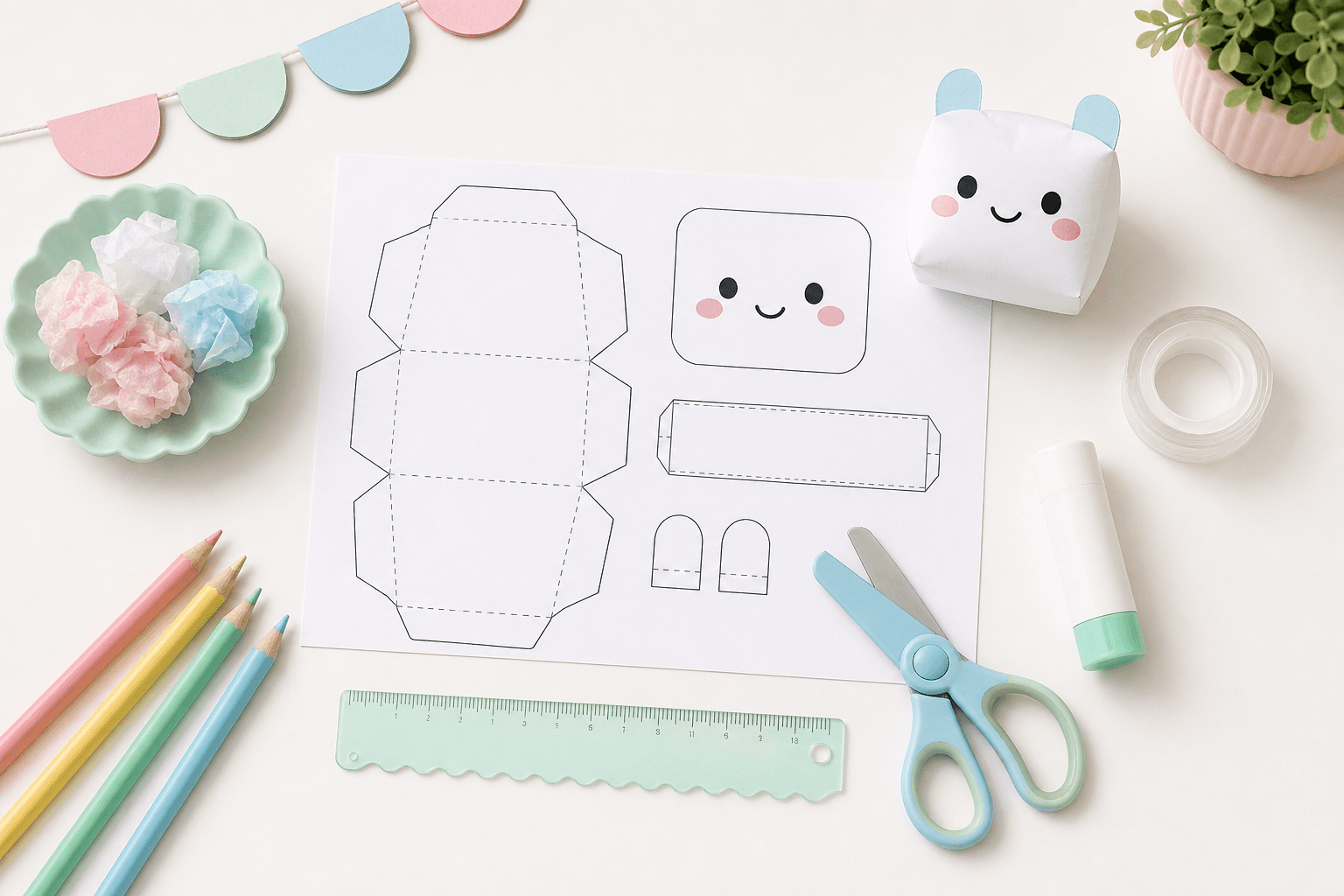
The two things people mean by squishy maker
Some searchers mean a branded machine such as the Doctor Squish Squishy Maker. That kind of product helps hold a balloon or shell while you add a filling and close it. Other searchers mean a silicone or craft kit where you mix, mold, cure, and decorate a soft object. Both are DIY tools, but they have different supplies, cleanup, and safety requirements.
The useful first question is whether you want a device-led project or a design-led project. A maker tool is appealing when you want to experiment with fillings and shapes. A printable PDF is appealing when you mainly want a cute finished object, a repeatable classroom activity, or a project that uses supplies you already understand.
What a careful maker session looks like
Start with the manufacturer’s instructions and a clear work surface. Check the correct shell, support piece, filling, closure, and age guidance. Some products involve powder, liquid, balloons, small accessories, or pressure, so the setup is part of the project rather than an afterthought. Keep packaging and instructions nearby until the piece is complete.
Do not add random household mixtures just because a short video shows a satisfying result. A filling can leak, react, stain, or become unsafe when it is enclosed. Use only compatible materials, follow the tool’s stated limits, supervise children as directed, and inspect the finished toy before it is handled repeatedly.
- Read the manual before choosing a filling or shell.
- Use a wipeable surface and keep small parts contained.
- Follow age, pressure, closure, and cleanup instructions.
- Stop using the result if it leaks, tears, or releases material.
When a printable paper squishy is the easier maker
A paper pattern removes the device and the liquid variables. You print the shape, decorate it flat, cut the edge, add light filling, and seal it with tape. The design can still feel personal because you choose colors, expressions, and finishing details. It is a good fit when the making needs to be visible, pause-friendly, and easy to repeat.
The paper result is not a manufactured sensory toy and should not be advertised as one. That honesty is useful: a child or teacher can decide whether the goal is a creative project, while a buyer looking for a specific tactile product can read the maker’s own specifications instead.
A practical way to start
- 1
Define maker
Decide whether you mean a device, a material kit, or a printable craft process.
- 2
Read the instructions
Check the correct shell, filling, age guidance, closure, pressure, and cleanup before starting.
- 3
Keep the surface safe
Use a wipeable workspace and keep uncured material, balloons, and small pieces supervised.
- 4
Choose paper when useful
Use a PDF when you want a no-mix, repeatable design activity with common supplies.
Useful source notes
These links support the product-safety or brand-specific details above. Product availability and rules can change, so use the source’s current instructions when making a purchase or using a kit.
- Doctor Squish maker site
Manufacturer-facing examples of the device, refills, and instructions.
- CPSC toy safety guidance
Follow age guidance and keep small parts and balloons away from younger children.
Common questions
What does a squishy maker do?
Depending on the product, it may hold a shell while you add a filling or help you form a squishy from a mold or kit. Read the exact manufacturer instructions because the tools and materials differ.
Can children use a squishy maker?
Use the specific product’s age guidance and adult-supervision instructions. Filling, balloons, powders, liquid materials, small accessories, and closures can all change the safety requirements.
What is the easiest squishy maker alternative?
A printable paper squishy is a simpler design activity: print, decorate, cut, fill lightly, and tape. It does not create the same material or texture as a device-made toy.