Squishy basics
Squishies: types, textures, and an easy paper idea
The word squishies covers more than one kind of soft, squeezable thing. This guide sorts the category into useful buckets, then shows where a printable paper squishy fits if you want to make something instead of only shopping for it.
- Best starting point
- Round or boxy paper shapes
- Craft time
- About 20–30 minutes
- What you need
- Paper, tape, scissors, light filling
What people mean when they say squishies
A squishy is usually a small object made to be pressed, squeezed, or fidgeted with. Some are slow-rise foam, some are quick-rebound mochi-style toys, and some are gel or silicone-filled. Food shapes, sleepy animals, fruit, and simple round blobs are popular because the shape is easy to understand even before you pick one up.
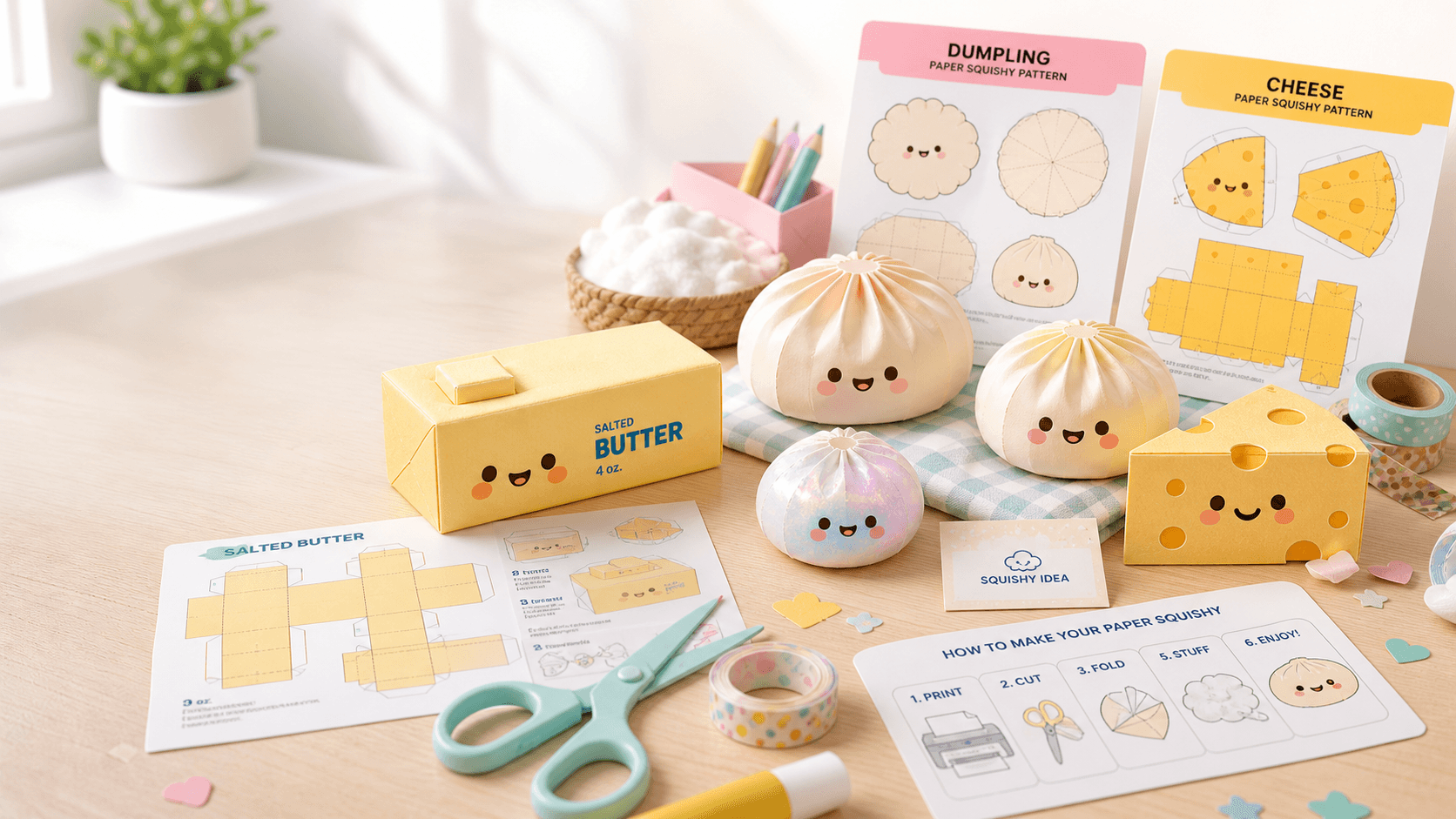
There is also a paper-squishy version. It is not a foam toy and it will not have the same spring-back feel. Instead, you print a shape, close the edges with tape or glue, and add a light filling such as tissue or soft scrap paper. The result is a small creative object that looks puffy and can be gently pressed, displayed, or remade in a new color.
- Slow-rise foam: a soft toy that takes longer to return to shape.
- Mochi-style: a small, smooth, rubbery squeeze toy with a quicker rebound.
- Gel or silicone-filled: a heavier, stretchier, or more fluid-feeling option.
- Paper squishy: a printable craft with a light, adjustable filling.
Choose the feeling and the project, not just the trend
If you want something to keep in one hand, look for the texture and resistance you actually enjoy. A quiet, soft squeeze may work better at a desk than a noisy clicker. A larger plush may be better for hugging, while a tiny mochi shape is easier to carry. There is no single best squishy; the right choice depends on where it will live and how it will be used.
If you want a low-pressure activity, making a paper version gives you a different kind of satisfaction. You choose the face, the colors, and the amount of filling. The craft has a clear finish line: the pieces line up, the edges are sealed, and the shape is ready to sit beside your pencils or join a small collection.
A first paper squishy that feels finished
Start with a rounded dumpling, a flat cookie, or a simple butter block. These shapes have enough surface area for tape and do not punish you for being slightly off with the first cut. Print at 100% scale, decorate the flat pieces before closing them, and add filling slowly. A lightly filled craft usually looks cleaner than one packed until the seams pull apart.
The most useful improvement is to prepare your work area before you cut. Put the tape on the edge of the table, keep a small filling pile nearby, and keep one finished sample or the assembly notes in view. That turns the project into a short sequence rather than a pile of parts that needs rescuing halfway through.
A practical way to start
- 1
Print
Use ordinary printer paper first and keep the PDF at 100% scale.
- 2
Decorate
Add a face, blush, sprinkles, or your own small details while the sheet is flat.
- 3
Cut
Cut on the solid outline and keep enough paper around the edge for tape.
- 4
Close
Tape most of the edge, leave one opening, and add a small amount of tissue.
- 5
Finish
Seal the final opening, smooth the tape, and press gently instead of overfilling.
Common questions
Are paper squishies the same as real squishy toys?
No. Paper squishies are printable crafts with a light filling. They can look puffy, but they do not have the same foam, gel, or silicone texture as a manufactured toy.
What is the easiest squishy shape to make from paper?
A rounded dumpling, cookie, or simple cube is a good first choice because the edges are easy to see and there is enough room for tape. Start with a free template and print one test copy.
Can children make paper squishies?
Yes, with age-appropriate help. Adults should supervise scissors, tape, small scraps, and any filling, especially for younger children.